Must Do Tasks
1. Mow once to twice a week. Never remove more than 1/3 of the grass blade at a time.
2. Water deep and infrequent: 1 to 1.5 inches per week.
3. Control weeds: post-emergent and pre-emergent herbicide
4. Fertilizer application: 0.5 to 1 pound of nitogen per 1000 sq/ft every 4-6 weeks
5. Measure yard square footage.
6. Always read the instructions on the label for the product you are using
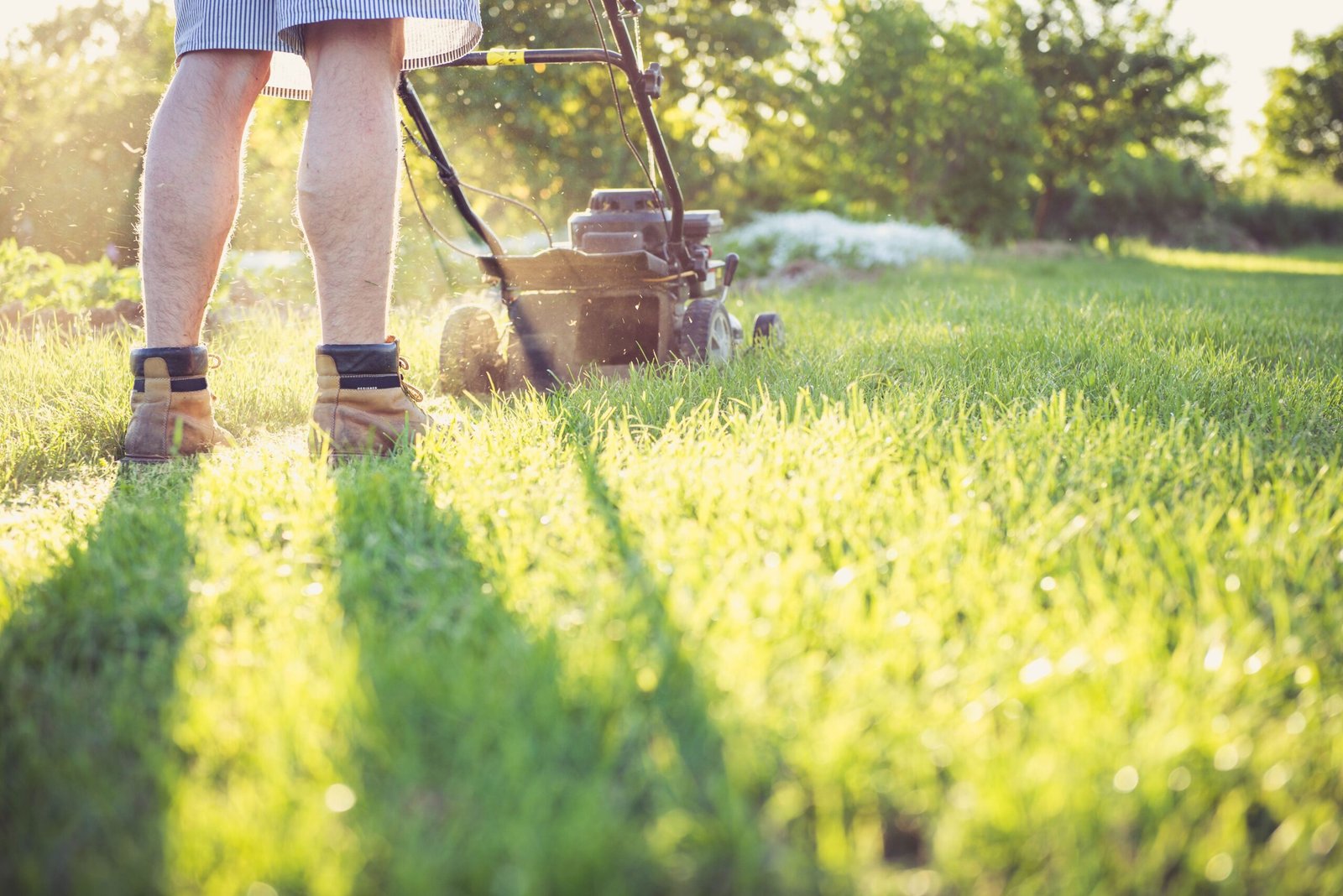
January
Lawn is dormant. Keep off the grass during frost to prevent damage.
Equipment Maintenance
– Lawn Mower: sharpen blades, check spark plugs and air filter, replace gas and oil, general cleaning.
– Weed Eater: replace trimming line, check spark plug and air filter, replace gas, general cleaning.
February
Clean up debris. Apply pre-emergent herbicide.
- Pre-emergent: Apply when soil temperature is above 55 degrees. Water in product with 1/2 inch of water within 7 days of application. Try to time with local rain showers if access to irrigation is limited. Pay attention to the product label for rate.
March
First mow of the season/scalp.
- Scalp: Wait until at least 50% green up and after no more risk of frost. Set lawn mower to lowest setting and bag clippings if able. You may be able to scalp earlier depending on weather and lawn green up activity.
- Water .75 to 1 inch per week. If watering twice a week. water .4 to .5 inches per session.
- Mow 1.5 to 2 inches every 7 to 10 days.
April
Mow weekly at 1-1.5 inches. Apply first round of fertilizer.
- Apply after lawn is 50% greened up and coming out of dormancy. Apply .5 to 1 pound of nitrogen per 1000 sq/f repeat every 30 days. Yearly goal for fertilizer is 3-5 pounds per 1000sq/ft.
- Mow: 1.5 to 2 inches every 7 days.
- Water: 1 inch per week. (2x a week .5 inches per session)
May
Growth accelerates.
Mow: Height 1.5 to 2 inches every 5 to 7 days.
Water 1 to 1.25 inches per week. (2x a week .5 to .65 inches per session)
Fertilizer: 0.75 to 1 pound of nitrogen per 1000 sq/ft.
June
Peak growth begins. Maintain deep, infrequent watering.
Mow: Height 1.5 inches every 4 to 5 days
Water: 1.25 inches per week (2x a wek .6 inches per session)
Fertilizer 0.75 to 1 pound of nitrogen per 1000 sq/ft
July
Watch for heat stress. Increase water per week
Mow: Height 1.5 inches every 4 days.
Water: 1.25 to 1.5 inches per week. (2 to 3 times a week weather depending 0.6 to 0.75 per session)
Fertilizer: 1 application of 0.5 to 0.75 pounds of fertilizer per 1000 sq/ft. Do not exceed in extreme heat. Potentially switch to a higher potassium fertilizer to help with heat stress.
Weed control: avoid blanket herbicide application in extreme heat.
August
Continue regular mowing and watering. Watch for heat stress.
Mow: Height 1.5 to 1.75 inches every 4 to 5 days.
Water: 1.25 to 1.5 inches per week (0.6 to 0.75 inches per session)
Fertilizer: 0.5 pounds per 1000 square feet. Potassium emphasis.
Weed control: avoid blanket herbicide application in extreme heat.
September
Begin planning fall pre-emergent. Slow down nitrogen fertilization.
Mow: 1.5 to 2 inches
Water 1 inch of water per week (2x a week 0.5 inches per session)
Fertilizer: Last fertilizer application for the season if needed. Do not exceed yearly nitrogen application rates
Weed control as needed.
October
Raise mowing height slightly. Prepare for dormancy.
Mow: Height 2 inches every 7 to 10 days
Water: 0.75 to 1 inch per week. Reduce as temperatures drop.
Fertilizer: None
Weed control: Apply per-emergent herbicide for winter weeds. water in with 0.5 inch if water.
November
Lawn turns brown (dormancy).
Water only if dry
No fertilizer
December
Dormant period. Avoid heavy traffic and enjoy the break!